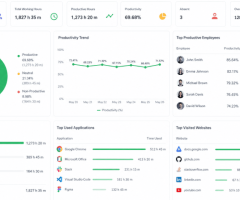
The landscape of modern work has fundamentally shifted over the last few years. With remote and hybrid work models becoming the permanent standard for many industries, organizations face a unique challenge: how to maintain high productivity and operational visibility without sacrificing employee autonomy. Enter employee work monitoring software. These digital tools are designed to bridge the physical gap between managers and distributed teams, offering data-driven insights into daily workflows. When utilized strategically through comprehensive platforms like WorkDesQ, these systems transform from mere tracking mechanisms into powerful engines for organizational growth.
The Strategic Benefits of Monitoring
Why a...
The landscape of modern work has fundamentally shifted over the last few years. With remote and hybrid work models becoming the permanent standard for many industries, organizations face a unique challenge: how to maintain high productivity and operational visibility without sacrificing employee autonomy. Enter employee work monitoring software. These digital tools are designed to bridge the physical gap between managers and distributed teams, offering data-driven insights into daily workflows. When utilized strategically through comprehensive platforms like WorkDesQ, these systems transform from mere tracking mechanisms into powerful engines for organizational growth.
The Strategic Benefits of Monitoring
Why are businesses rapidly adopting this technology? The motivations extend far beyond simply making sure people are actively sitting at their desks.
• Identifying Operational Inefficiencies: Monitoring software helps pinpoint systemic bottlenecks that might otherwise go unnoticed. If data shows a team spends 30% of their day navigating a clunky internal application, leadership can identify that friction and invest in better systems.
• Fair Workload Distribution: High-performing employees often face quiet burnout due to invisible, overwhelming task loads. Tracking software visually maps out who is operating at maximum capacity and who has the bandwidth to take on more, ensuring fair project distribution.
• Data Security and Compliance: For industries handling sensitive medical, financial, or personal information, monitoring provides an essential, automated audit trail. It ensures that internal compliance protocols are strictly followed and helps mitigate the risk of internal data breaches.
Implementation: The Transparency Imperative
The introduction of tracking tools can understandably trigger anxiety and pushback if mishandled. The secret to a successful software rollout is radical transparency. Organizations must proactively communicate the why behind the software. Whether the goal is to optimize software licensing costs, track billable client hours accurately, or streamline project management, leadership must be entirely clear with the workforce.
A strong company policy dictates that monitoring should focus on macro-level outputs and behaviors relevant to the job. For instance, using WorkDesQ to analyze team-wide trends in application usage is a highly constructive way to guide IT spending. Conversely, using software to count an individual's keystrokes per minute is an outdated tactic that often damages morale. Establish clear boundaries and allow employees full access to their own dashboard data so they can self-manage.
Fostering a Culture of Trust
Ultimately, no software solution can replace effective, empathetic management. Monitoring tools should act as a diagnostic instrument to facilitate better conversations. Instead of micromanaging idle time, managers can leverage the data to ask, "I see this specific project phase is taking longer than expected—what resources do you need to remove these roadblocks?"
Employee work monitoring software is a vital component of the modern business toolkit. By prioritizing transparency, focusing on actionable data, and fiercely protecting mutual trust, companies can build a resilient, highly efficient workforce perfectly adapted for the future of work.